



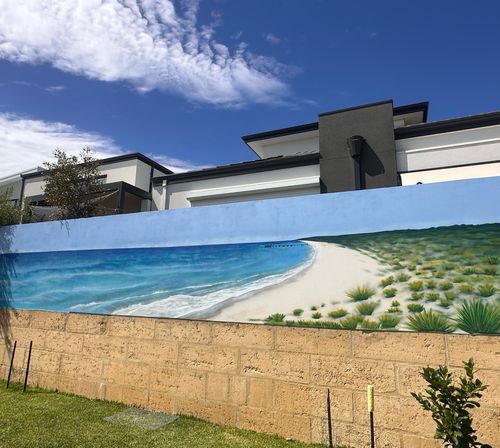


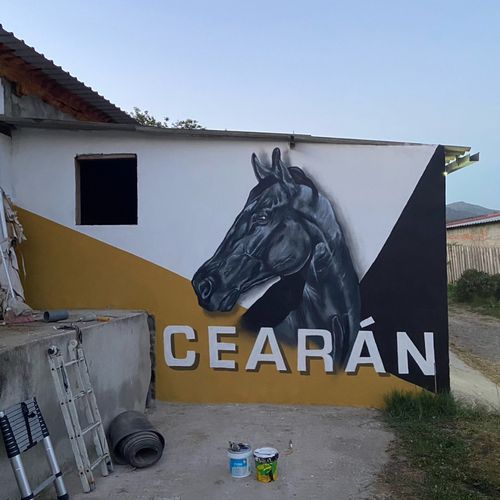
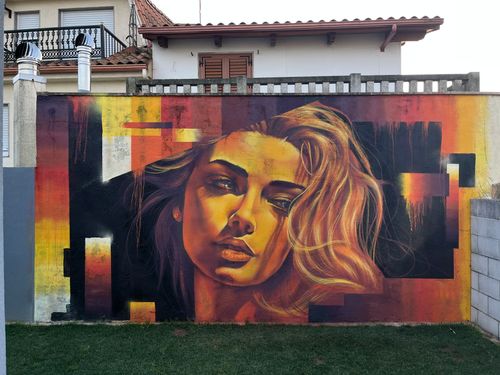


Realistic murals mimic photo realism. The idea is to take a true-to-life image and paint it correctly onto the wall, floor or ceiling. Realistic mural artists can create a perfect large-scale rendition of a person, place or thing. Realism doesn't necessarily mean that fantastical creatures are off the list; many surreal paintings incorporate realism.
The lengthy history of realism defines the style as an "accurate, detailed, unembellished depiction of nature or contemporary life." The term "realism" wasn't truly adopted until the mid-19th century. However, many sculpture artists and painters' work reflected realism before its peak in the mid-19th century and into the 20th century. Artists of the time aimed to present more honest and unidealised artistic portrayals of day-to-day life. Over time, all art styles, including realism, have shifted and changed according to current trends and political persuasions. Modern realism adapted to incorporate the whimsical and unruly nature of abstract art but maintaining realistic clarity.
Realistic graffiti art and realistic murals, in a modern sense, remain to be great methods of communication to the public—artists who paint detailed portraiture paint memorials and dedications to deceased figures and celebrities. Landscape artists can redesign a cityscape with a realistic scenic tropical view. Realistic murals are also standard amongst sports murals at stadiums and sporting grounds. The rich history of realistic artwork continues to intertwine itself within current projects.
Realistic graffiti is immediately identifiable to anyone, and everyone as its art is usually relatively understandable at first glance. Unlike other art styles, realistic graffiti is made up of neutral tones due to its subject matter. Portraits and even landscapes don't usually contain bright, fluorescent colour schemes. Should you wish to incorporate transcendent blues and reds, your artists will work their magic. There are no real rules to art. Your imagination decides what is real and what is not!